Pulling a foundation breaks into four pieces: exposing the wall, breaking it, getting the material out, and putting something back in the void. Access governs the schedule, since a wall a machine can circle comes out far faster than one wedged between a fence and a neighbor. Anyone searching foundation removal near me is better served by the footprint, the depth, and the wall material written down first. Foundation removal Ann Arbor runs from the top of the wall down to whatever elevation you named.
01Poured Concrete Foundations
Poured walls run six to ten inches thick and carry rebar that holds the pieces together long after the concrete cracks. A hoe ram or a hydraulic breaker takes them down in sections, starting at a corner instead of mid-run. Rebar gets cut free and stacked apart from the clean concrete so both loads stay worth recycling.
Tell us whether the basement floor slab comes out with the walls or gets punched for drainage and left in place. Footings under a poured wall usually project several inches past the face and add weight nobody counted. Older pours around here sometimes hide a cold joint where an addition was tied on, and that changes how a wall lets go. Photograph each corner from outside, since the corners are where thickness and reinforcement show.
Get a quote →
02Block And Stone Walls
Hollow block goes down in courses and loads light, though the cores are often filled with grout at the corners and under beam pockets. Fieldstone is the other extreme: heavy, irregular, and set in a lime mortar that gave up decades ago. A stone wall can drop without warning once the soil behind it is stripped, so it comes down from the top in lifts. A write-up for Ann Arbor foundation removal services needs to say which of those two you have.
Stone and block do not recycle the way clean concrete does, and the disposal rate reflects that. Mortar dust and old parging get wetted down when the wind is up. Say whether any of the stone is being saved for a wall or a garden feature, because salvage is picked by hand rather than by bucket.
Get a quote →
03Basement Wall Removal
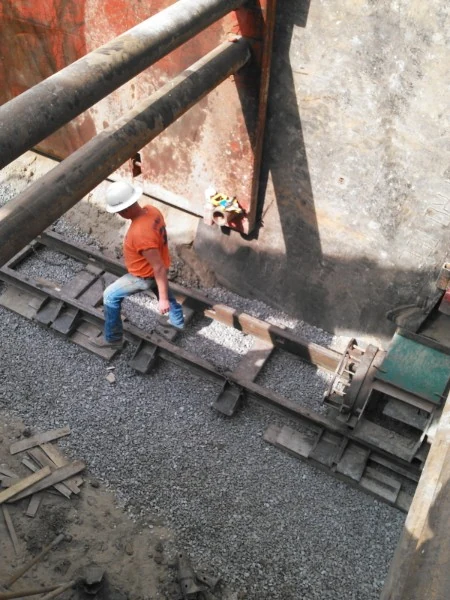
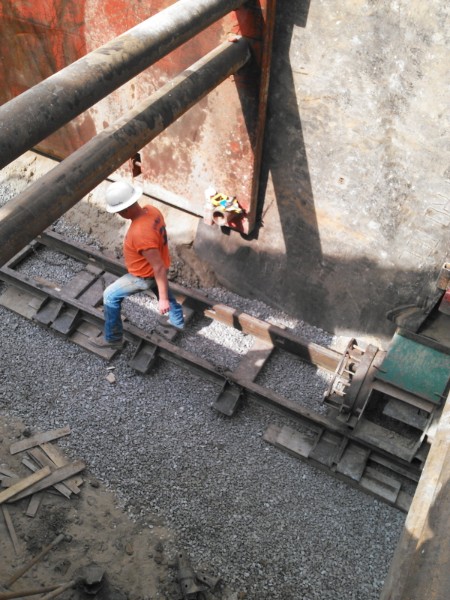
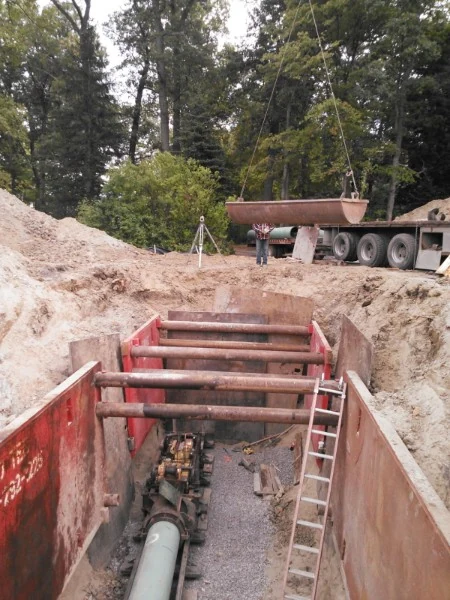
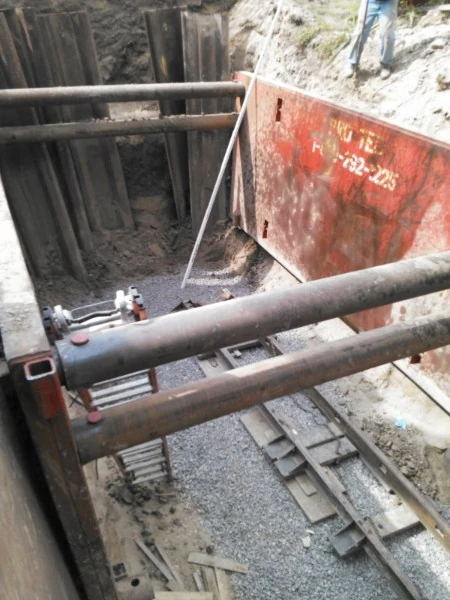
A full basement is where foundation removal Ann Arbor turns into real volume: four walls, a floor, and a stair well, with the open void afterward being the real project. Soil gets pulled back from the outside face first so the wall has room to fall inward instead of toward whatever is next to it. Nothing goes near the edge until the utilities feeding that basement are shut off and written up.
Beam pockets, pilasters, and coal chutes all mark spots where the wall is thicker or weaker than the run beside them. Bulkhead doors, cellar stairs, and the areaway around them leave with everything else inside that outline. For a basement coming out under a dwelling or an outbuilding, the sequencing appears on our page covering demolition in the Ann Arbor area. Say whether the floor slab leaves the property or gets broken and buried, because that answer moves the truck count as well as the fill volume.
Get a quote →
04Footings And Piers
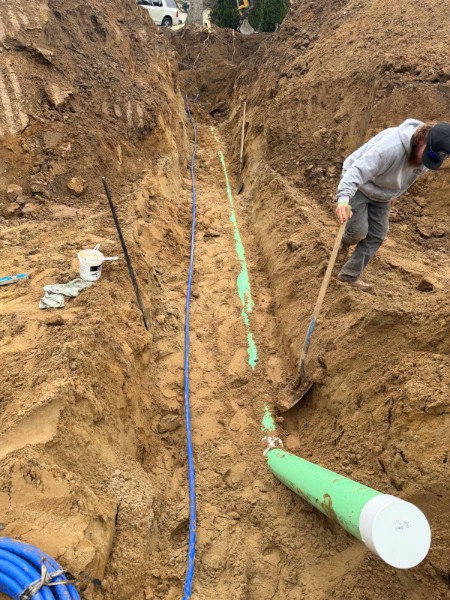
Footings sit below the wall and below frost, which around here means roughly forty-two inches of digging before anything gets hooked. Porch piers, deck footings, chimney pads, and lally column bases are scattered across most older lots and rarely appear on any drawing. Each one is a small excavation of its own with its own spoil pile. Skipping them leaves obstructions the next crew hits with a trencher.
We probe for buried pads along the drip line and flag whatever turns up before the machine swings. A foundation demolition contractor Ann Arbor MI quote should say how many piers are assumed and what happens if more appear. Anything found beyond that count gets priced before it is dug, not after.
Get a quote →
05Slab-On-Grade Removal
A slab foundation has no basement to fill, so the job shifts from volume to surface area and edge detail. The thickened edge around the perimeter runs deeper than the field of the slab and holds most of the steel. Vapor barrier, insulation board, and any radiant tubing beneath the pour leave with the concrete rather than staying in the ground.
Plumbing stubbed up through a slab gets cut and capped by the plumbing trade, ahead of any breaking. Anchor bolts and sill plate fragments get pulled so the loads stay clean for a crusher. Sand or stone beneath a slab is frequently worth keeping as fill, and we tell you once the concrete is up. Finish the area at a stated grade so the next crew inherits an elevation instead of a guess.
Get a quote →
06Partial Removal For Additions
Sometimes only one wall comes out, and that wall is holding up part of a house that has to stay standing. Shoring, temporary support, and the engineer’s direction all come ahead of the saw, and none of that is the demolition contractor’s call. Owners who bring in foundation removal companies in Ann Arbor on partial work should have a stamped detail in hand first. Our part is the removal itself, cut to the line an engineer has drawn.
Saw cutting rather than hammering keeps the remaining wall intact and the vibration down. The new tie-in point gets left square and clean so a mason or a concrete crew can work off it. Existing footings under the retained wall stay undisturbed and protected through the whole operation.
Get a quote →
07Fill And Compaction
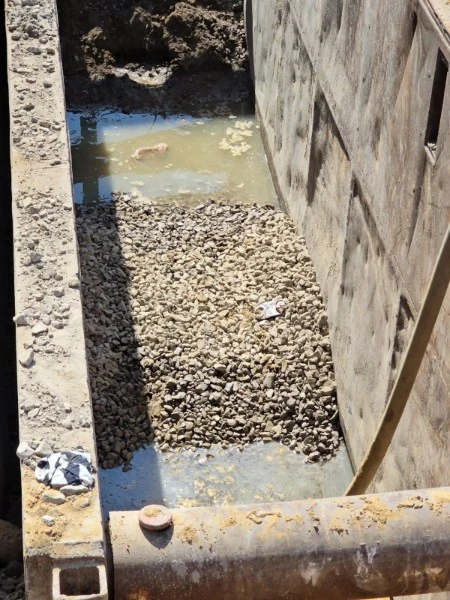
An open cellar hole gets closed with material that will hold what goes on top of it later. Clean fill lands in lifts of eight to twelve inches, and every one gets compacted before more material arrives. Dumping a basement full in one drop guarantees a low spot within two seasons.
State early whether the ground has to carry a building later, since structural fill and yard fill answer to different specifications. Broken masonry can serve inside the fill only where the specification allows it, and organics never can. Ask for the material type, the lift thickness, and the compaction method in writing. Crown the finished surface slightly so water runs away from the footprint rather than into it.
Get a quote →
08Concrete Haul-Off
A modest basement can produce more tonnage than an entire house frame, and it all has to leave by truck. Clean concrete with its steel heads to a crusher and returns to the market as aggregate. Loads mixed with stone, mortar, or dirt lose that option and cost more to put down. Separating the piles as they come up is the only thing that makes recycling possible.
Truck routing matters as much as tonnage, because a narrow street limits the load count on any given day. The loading point gets picked before the first swing, which keeps the travel path short. Lawn, curb, and sidewalk along that path get matting or plating where the ground is soft.
Get a quote →