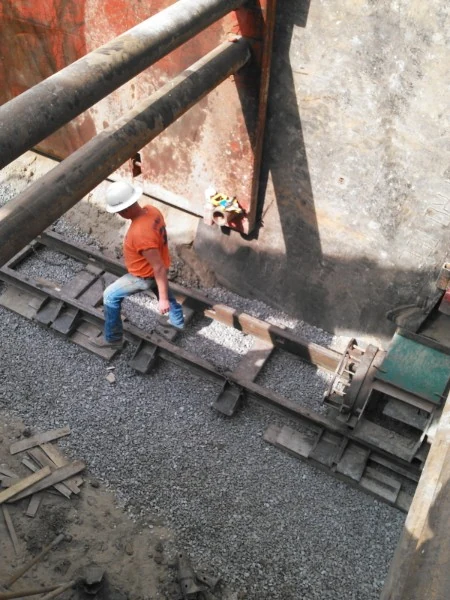
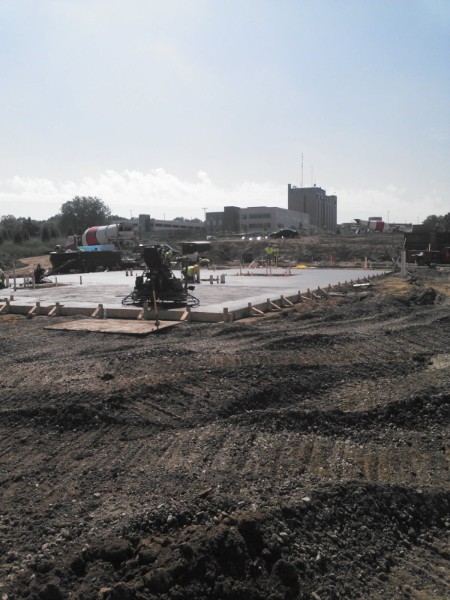
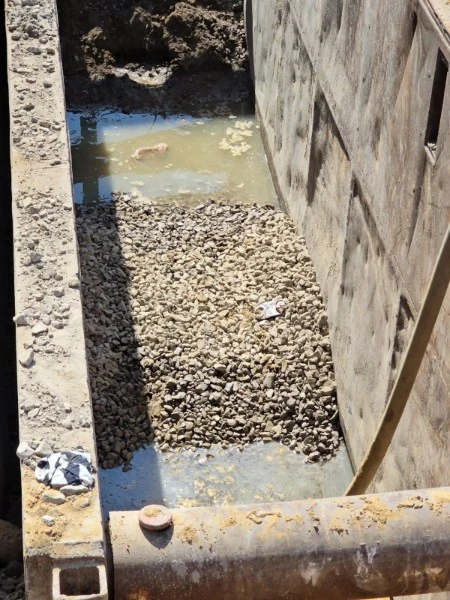
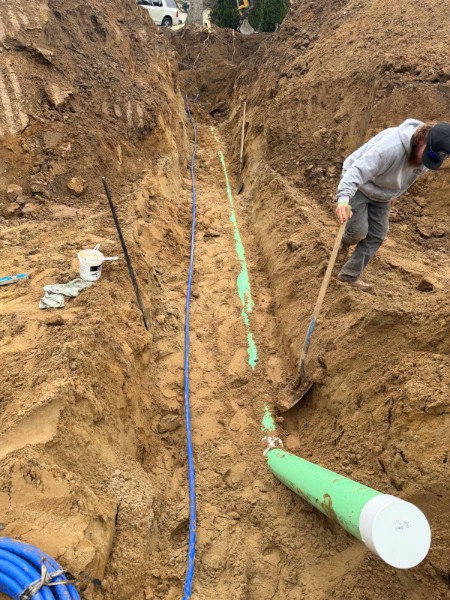
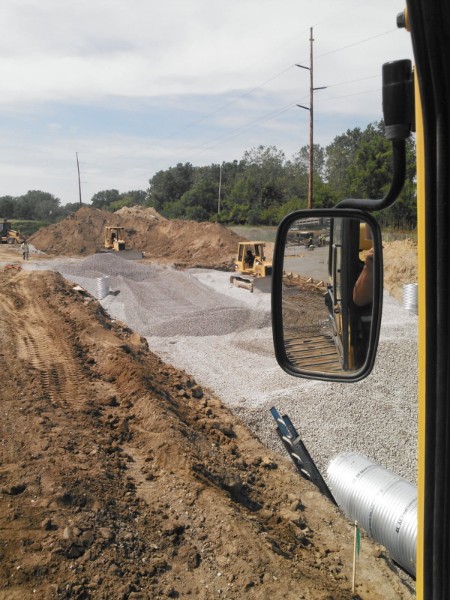
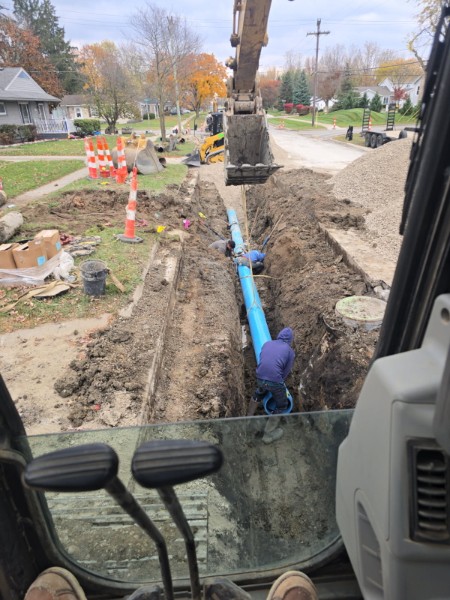
Tearing out a drive splits into four jobs: cutting, breaking, loading, and grading. Price and schedule follow the surface type and how a truck reaches it, not the square footage alone. Anyone typing driveway removal near me should have the length, width, and surface written down first. Driveway removal Ann Arbor starts at the cut line and stops at the elevation you asked for.
01Concrete Driveway Removal
Poured concrete gets saw cut at the property line or at a control joint you pick, then broken with a hammer or ripped with a bucket. Thickness runs anywhere from four inches on an old residential slab to eight or more where trucks once parked. Wire mesh and rebar change how the pieces come up and how they load.
Tell us where the slab should stop: at the sidewalk, at the apron, or short of the garage door. Old pavement often sits directly on clay with no stone under it at all, and that shows up the moment the surface is off. Your written scope should say whether concrete driveway removal Ann Arbor loads leave the property or get crushed on site for reuse as base. Photos of the cracks, the joints, and the edge along the lawn tell us more than a square-foot number.
Get a quote →
02Asphalt Driveway Removal
Asphalt peels rather than shatters, so a drive comes up in mats that load fast when a truck can back close. Depth is usually two to four inches over a gravel base that may or may not be worth keeping. Multiple overlays are common on older Ann Arbor drives and every layer adds weight to the haul. The gravel underneath gets its own decision: leave it, regrade it, or take it out with the blacktop.
Millings and broken blacktop ride to a recycler instead of a landfill when the load stays clean. Watch the edges where asphalt has crept over the lawn or feathered into the street, because that is where the real width shows up. Ask for asphalt driveway removal near me quotes that name the depth assumed and the plan for the base underneath.
Get a quote →
03Paver And Brick Drives
Pavers and clay brick sit on a sand setting bed over stone, and they come up in pieces small enough to salvage. Say up front whether you want them stacked on pallets for reuse or carried off with everything else. Edge restraints, spikes, and the fabric below all have to come out or the new base will never compact.
The sand bed is the part people forget. It has to be scraped down to the stone or the replacement surface will settle in the first spring. Border courses and soldier rows often run under the turf edge, so the real footprint is wider than what you see. Count square footage from the outside of the border, not the field.
Get a quote →
04Apron And Curb Cut
The apron is the stretch between the sidewalk and the street, and it usually answers to a different set of rules than the rest of your drive. Work in that strip can involve the City of Ann Arbor, the road agency, or both, so confirm who has to approve it before scheduling. A curb cut being widened, narrowed, or closed is its own review with its own paperwork. We can quote the removal, but the approval is yours to obtain.
Sidewalk flags that cross the drive often get replaced at the same time, since the saw cut lands right at their joint. Read our Ann Arbor demolition overview for how this fits alongside larger teardowns on the same lot. Mark the water shutoff box, the gas line, and any pull box in that strip before any machine goes near it.
Get a quote →
05Walkways And Steps
The walk from the drive to the front door was usually poured the same week as the drive and shares its cracks. Front steps, stoops, and their footings frequently tie back into the same pour. Pulling one without the other leaves a ragged joint the new pour cannot hide.
Steps carry footings that reach deeper than anything under a drive, sometimes three feet or more. Those footings either come out or stay in place on purpose, and the choice belongs in the scope. Handrails, lights, and low walls beside the walk each need calling out. A quote covering Ann Arbor driveway removal services ought to price the walk and the steps as separate items.
Get a quote →
06Base And Gravel Removal
Under a failed drive you usually find one of three things: clean stone worth keeping, dirty gravel mixed with clay, or nothing at all. Which one it is decides whether excavation stops at the surface or goes another six to twelve inches down. Contaminated base is the most common reason a drive heaves again after replacement. We check it once the surface is off and tell you what we find before hauling more than the quote covered.
Pulling base means the hole gets deeper and the truck count goes up, so it is priced as its own item. Sometimes the right answer is to dig only the soft spots and leave the rest compacted. Driveway removal contractor Ann Arbor MI quotes that ignore the base are quoting half the job.
Get a quote →
07Haul-Off And Recycling
Broken concrete, asphalt, and clean stone all have places to go that are not a landfill. Clean concrete gets crushed into aggregate and blacktop gets reheated into new mix. Keeping the loads separated on site is what makes that possible.
A single-car drive can fill a couple of truckloads and a long rural drive can fill a dozen. Truck access decides how many trips it takes and how much of the lawn sees a tire. We set the loading spot before the first cut so the route stays short and repeatable. Dirt, sod, and old landscape timbers ride out separately from the hard material.
Get a quote →
08Subgrade And Drainage Prep
Once the surface and base are gone, what is left is the soil your new drive will stand on. Soft, wet, or organic subgrade gets dug out and replaced with stone rather than compacted in place. We proof roll it, flag the soft areas, and give you the depth before anything is backfilled. Ann Arbor clay holds water, so this step is where most future cracking gets decided.
Grade the surface to move water toward the street or a swale, never toward the garage slab or a basement wall. Downspouts that used to dump onto the old pavement may need a line run under the new drive while the trench is open. Driveway removal Ann Arbor work should end at a stated elevation and slope, not just an empty rectangle.
Get a quote →